Off page SEO is the next step after on page SEO. In 2026, Shopify stores that skip this step struggle to compete, even when their on page optimization is solid. Search engines do not rank websites based on content alone. They evaluate trust, authority, and how a brand is perceived outside its own domain.
On page SEO builds the foundation. Off page SEO validates it. When one is missing, the other loses effectiveness.
This guide explains what Shopify off page SEO is, how it works, and why it must be built after your on page SEO is properly in place.
Why Off Page SEO Comes After On Page SEO
On page SEO tells search engines what your store is about. It organizes content, improves usability, and ensures technical accuracy.
Off page SEO answers a different question. Can this store be trusted.
If off page efforts begin before on page SEO is complete, the result is wasted effort. Links and mentions pointing to weak or unclear pages do not produce results. Authority must be earned on top of a strong foundation.
Skipping steps creates imbalance. Strong on page SEO with no off page support limits rankings. Heavy off page activity without on page structure leads to instability and poor conversions.
What Shopify Off Page SEO Really Includes
Off page SEO involves signals that occur outside your Shopify store. These signals help search engines understand your brand relevance and authority in your niche.
Key components include
Backlinks from relevant and trusted websites
Brand mentions across the web
Marketplace presence and citations
Social media visibility and engagement
Content distribution and sharing
In 2026, off page SEO is less about volume and more about credibility.
Backlinks and Authority Building
Backlinks remain one of the strongest ranking signals. For Shopify ecommerce, links should come from relevant sources such as industry blogs, ecommerce publications, reviews, and partner sites.
Quality matters more than quantity. A few strong links from trusted sources outperform dozens of low quality links.
Links should point to
Core pages
Collections
Educational blog content
Linking to thin or poorly optimized pages reduces impact.
Brand Mentions and Digital Presence
Search engines recognize brand mentions even when links are not present. Mentions across blogs, forums, reviews, and social platforms strengthen brand authority.
Consistency is important. Brand name, messaging, and presence must align across all platforms. This consistency reinforces trust signals and improves recognition.
Physical and Marketplace Presence
For ecommerce brands, physical signals still matter.
Business profiles
Marketplace listings
Consistent branding across platforms
Selling on marketplaces like eBay and Mercari contributes indirectly to off page SEO by increasing brand exposure and trust. These platforms act as authority amplifiers when managed correctly.
Social Media and Off Page SEO
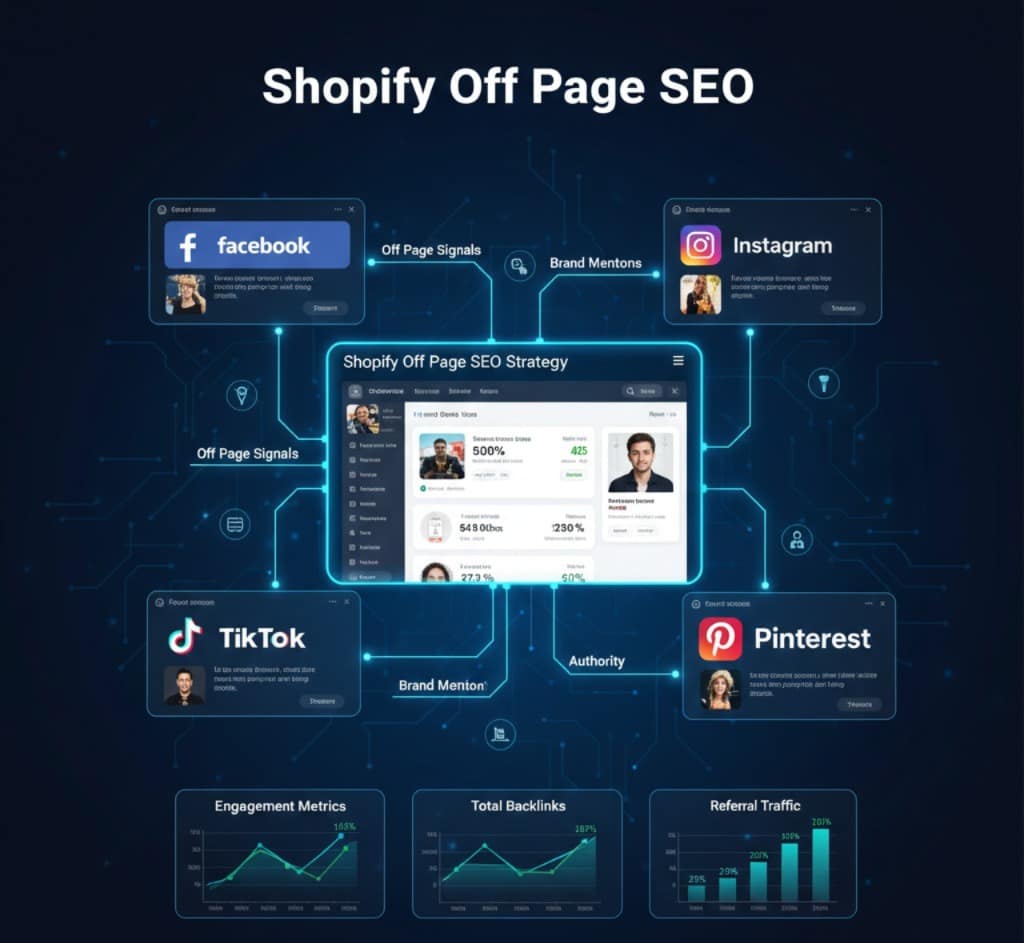
Social media does not directly replace backlinks, but it strongly supports off page SEO. Social platforms amplify content, build awareness, and generate brand signals that search engines observe.
Facebook supports brand credibility and community building. Consistent posting, engagement, and sharing content improves brand trust and visibility.
Instagram strengthens visual branding and product discovery. Engagement signals and profile consistency contribute to brand authority and recognition.
TikTok
TikTok drives rapid exposure and discovery. While links are limited, brand mentions and search behavior influenced by TikTok content impact overall visibility.
Pinterest functions as a visual search engine. Optimized pins can drive long term traffic and strengthen off page presence through content discovery.
Social media works best when aligned with SEO goals, not treated as a separate effort.
Content Distribution and Reach
Publishing content is only the first step. Off page SEO grows when content is distributed strategically.
Sharing blogs across social platforms
Earning mentions through collaborations
Repurposing content into visuals and short form media
Distribution increases visibility, which leads to links, mentions, and authority.
How Skipping Off Page SEO Affects Growth
Without off page SEO
Rankings plateau
Authority remains limited
Competitors outrank stronger content
Organic growth slows
Search engines compare brands within the same niche. Off page signals often become the deciding factor.
How Onward Digital Space Builds Off Page SEO for Shopify Brands
Onward Digital Space approaches off page SEO as a strategic process.
Link building based on relevance and trust
Brand presence across ecommerce platforms
Social media alignment with SEO goals
Content amplification and authority growth
Performance tracking and refinement
Every off page action supports long term rankings and brand strength.
Off Page SEO Is a Long Term Commitment
Like on page SEO, off page SEO takes time. Authority is built gradually. Trust is earned through consistency.
Shortcuts lead to penalties or wasted effort. Sustainable growth comes from disciplined execution and strategic planning.
Final Thoughts
Shopify off page SEO in 2026 is not optional. It is the natural progression after on page SEO is complete. Skipping steps weakens results and slows growth.
When on page and off page SEO work together, Shopify stores gain visibility, trust, and competitive advantage.
Onward Digital Space helps brands build off page SEO with structure, intention, and long term focus, turning authority into measurable ecommerce growth.


I really appreciate how you simplify off-page SEO for Shopify, making it feel achievable particularly the sections on establishing authority and relevance outside of just on-site optimization. For small business owners looking to make their mark online, merging effective SEO with a user-friendly site presence is more crucial than ever.
If you can dream it, you can achieve it, as long as you have the discipline to see it through and the consistency to support it. SEO is not a one day result, it is a continuous process.